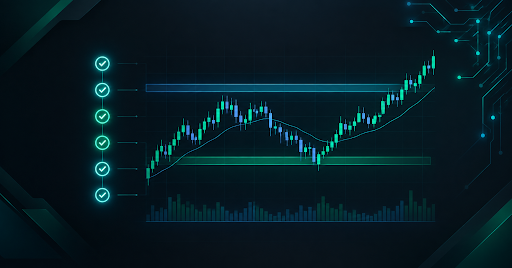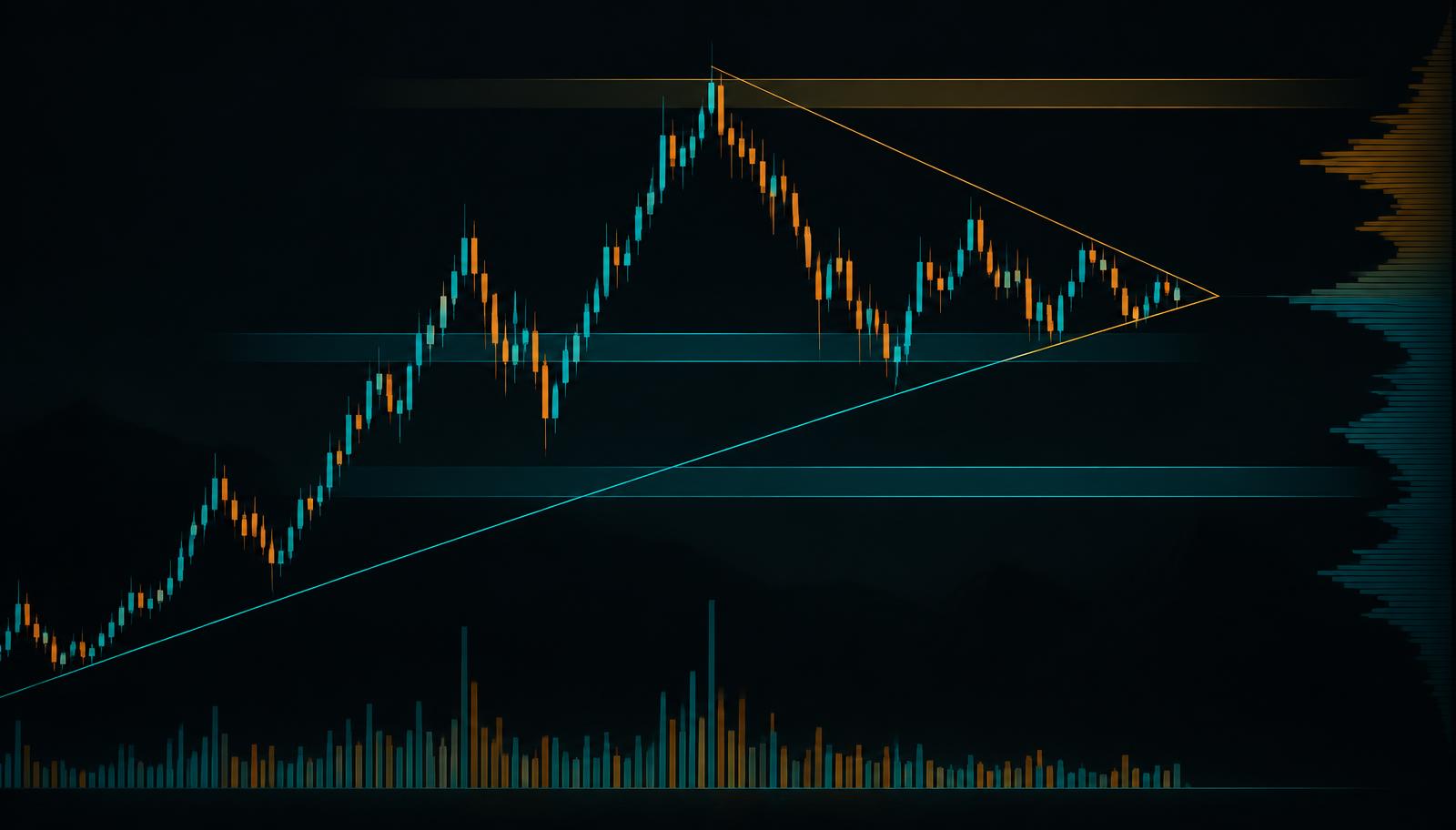
Order flow trading has a reputation problem. Search for it and you'll find two extremes — forum posts calling it "the only real edge left" and others dismissing it as overcomplicated noise for retail traders who'd do just as well reading a simple moving average. Neither take is very useful if you're actually deciding whether to invest the time.
This is a straight breakdown of what order flow trading involves, who it genuinely suits, and what it realistically costs to learn — no hype either direction.
What order flow trading actually involves day to day
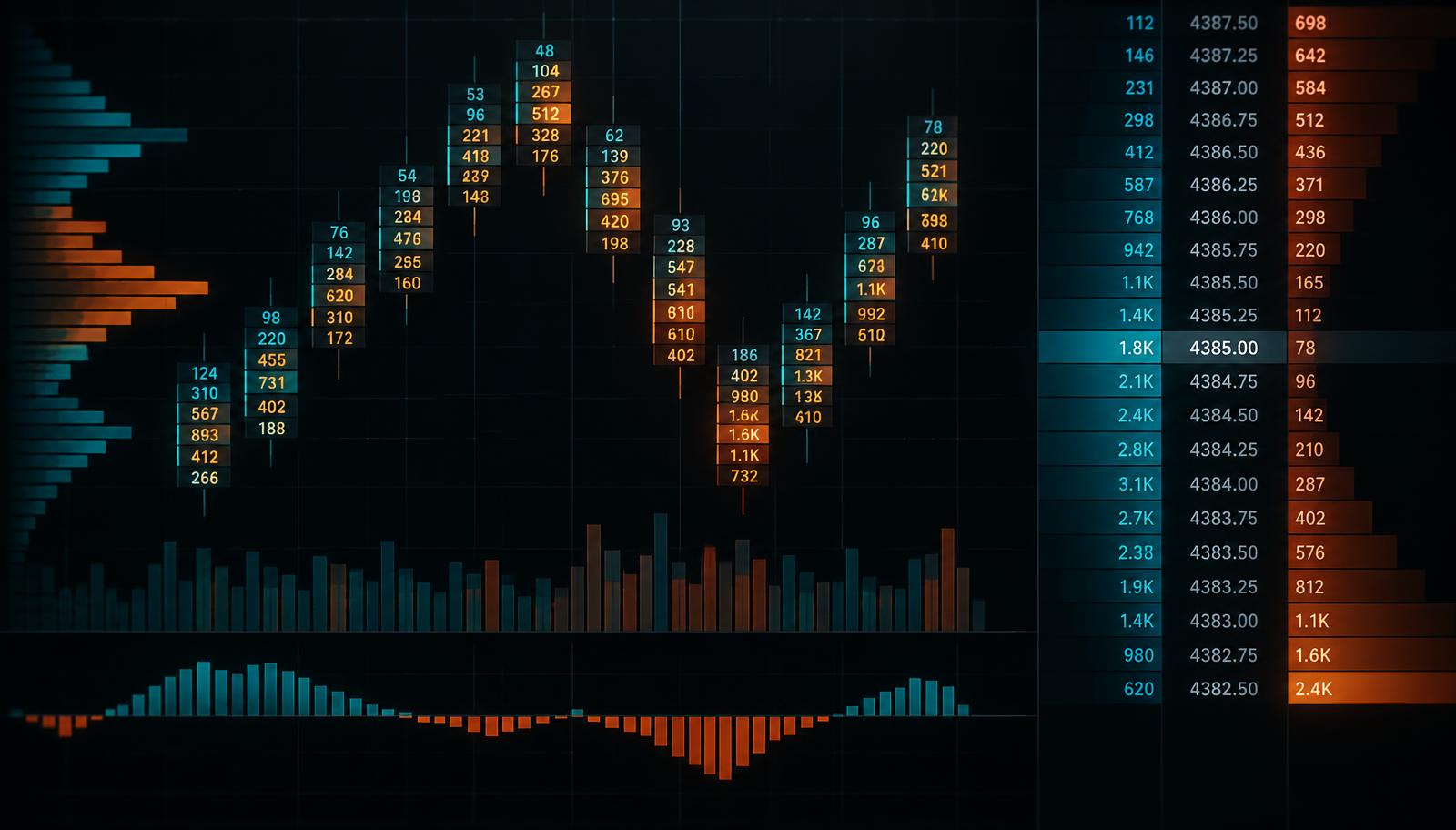
Order flow trading means making entry and exit decisions based on real-time transactional data — who's buying, who's selling, and how aggressively — rather than relying only on price and indicators. In practice, that means watching tools like DOM (depth of market), footprint charts, and delta alongside price action, and reacting to things like absorption, liquidity sweeps, and imbalance as they form.
It's a discretionary, screen-time-heavy style. There's no indicator you can set once and walk away from — you're actively reading the tape session by session, which is very different from swing trading off daily charts.
The realistic learning curve — how long it takes to get useful at it
Most traders underestimate this badly. A realistic timeline looks something like:
- Weeks 1–4: Learning to simply read the charts without being overwhelmed — understanding what delta, footprint, and DOM are actually showing.
- Months 2–4: Starting to recognize repeatable patterns (absorption at a level, a liquidity sweep followed by reversal) without forcing signals that aren't really there.
- Months 4–8+: Building enough screen-time pattern recognition to trade it with any consistency, and — critically — learning to combine it with broader market structure rather than reading order flow in isolation.
This is longer than most retail traders expect, and it's the single biggest reason people give up on order flow trading before it becomes useful. It rewards repetition more than study.
Who order flow trading suits
Order flow trading tends to suit:
- Traders active in liquid, fast-moving instruments — index futures, major FX pairs, large-cap equities — where there's enough transactional detail to read.
- People who can dedicate consistent, focused screen time during active market hours, rather than checking in occasionally.
- Traders who already have a handle on basic price action and market structure, since order flow works best as a confirmation and timing layer on top of that, not a replacement for it.
It tends to suit poorly:
- Part-time traders who can only check the market a few times a day — order flow's edge is largely in real-time reading, which doesn't translate to end-of-day review.
- Traders on illiquid or thinly-traded instruments, where the transactional data is too sparse to read meaningfully.
- Anyone looking for a mechanical, rules-based system — order flow reading stays fairly discretionary even with experience.
Tools traders use to learn order flow
The traditional path is a live data feed with DOM and footprint charting (through a futures or forex broker's platform) plus months of screen time. That works, but it's also the slowest and most expensive way to build the skill, since you're learning with real capital exposure from day one.
A faster, lower-risk path many traders now use is AI-assisted order flow analysis on historical or simulated captures — uploading real DOM, footprint, or volume-profile screenshots and getting a structured breakdown of the liquidity and absorption context, then checking that read against what actually happened next. This compresses the pattern-recognition loop without needing a live funded account to practise on.
What it costs to start — free tools vs. paid trading pricing
The upfront cost of learning order flow trading varies enormously depending on the path you take. A live Level 2 data feed alone can run into real monthly cost before you've placed a single trade, and that's before accounting for the capital you'd be risking while still learning.
You don't need an expensive data feed to start learning the fundamentals. TickForge's free plan covers the basics — chart analysis and simulated order flow reading — and its trading pricing only scales once you want deeper daily usage, so there's no upfront cost to find out whether order flow trading actually suits your style before committing to a live data feed.
A realistic first-month practice plan for learning order flow
- Week 1: Learn the vocabulary — DOM, footprint, delta, absorption, liquidity — without trying to trade any of it yet.
- Week 2: Review 10–15 historical order flow captures daily and try to identify absorption or liquidity sweeps before checking what price did next.
- Week 3: Start narrowing to one instrument and one session time (e.g. the first hour of a session), where volume and structure repeat most predictably.
- Week 4: Journal every read — right or wrong — and look for the specific mistakes repeating, rather than the wins.
TickForge is free to start, and its AI-assisted order flow reader is built exactly for this kind of repetition-based practice — no live data feed or funded account required to begin.
FAQ
- Is order flow trading profitable?
Order flow trading can be profitable for traders who put in the screen-time needed to build genuine pattern recognition, but it's not inherently more profitable than other trading styles. Its edge comes from earlier, more granular information than price alone provides — it doesn't remove the need for risk management, discipline, or realistic expectations.
- How long does it take to learn order flow trading?
Most traders need several months of consistent, focused screen time to become genuinely useful at reading order flow — commonly cited timelines run from four to eight months or longer. This is significantly longer than learning basic price-action or indicator-based trading, which is one of the main reasons many traders abandon it early.
- Do I need a funded trading account to learn order flow?
No. Order flow reading skills can be built using historical or simulated data captures before risking real capital, which is a lower-cost and lower-risk way to build pattern recognition than learning live with a funded account.
- What markets is order flow trading best suited for?
Order flow trading works best in liquid, high-volume markets where there's enough transactional data to read meaningfully — index futures, major forex pairs, and large-cap equities are the most common. It's less effective on illiquid or thinly-traded instruments, where order flow data is too sparse to provide a reliable signal.
- Is order flow trading only for professional or institutional traders?
No. Order flow tools that were once exclusive to institutional desks are now widely accessible to retail traders through modern broker platforms and analysis tools. What separates successful users isn't access to the tools themselves, but the time invested in building real pattern recognition with them.